8 October 2026 | Silverstone
The event is free, but registration is required.
The event is free, but registration is required.
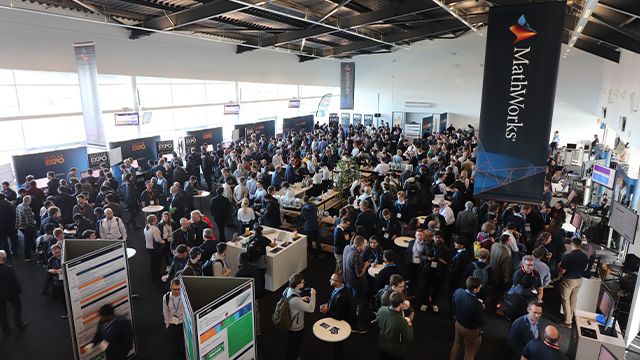
Join MATLAB EXPO 2026 United Kingdom to connect with MathWorks and industry experts to learn about the latest trends and advancements in engineering and science. You will discover new features and capabilities for MATLAB and Simulink that you can immediately apply to your work.



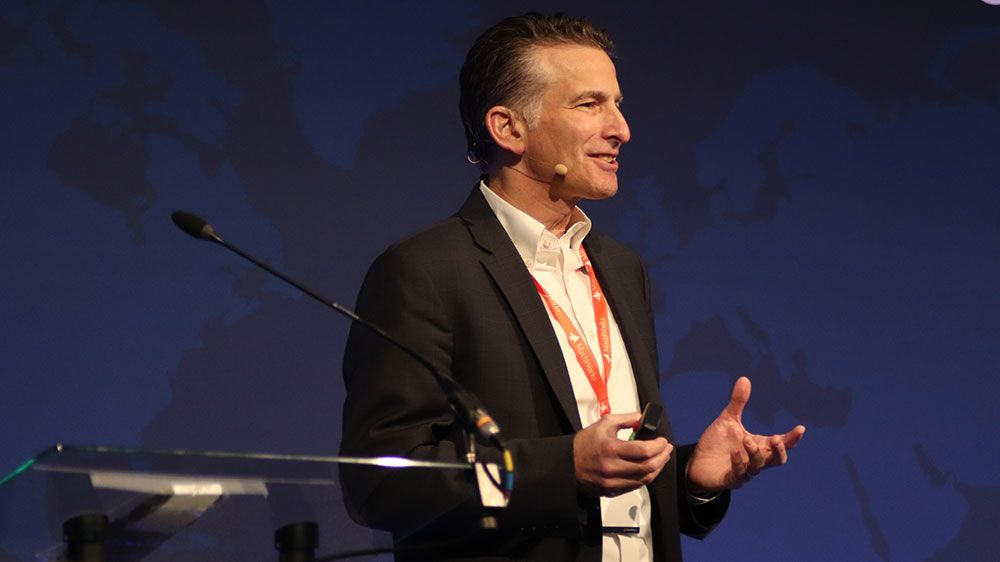
Keynote: The Agentic Engineer
Agentic AI is transforming how engineers work—from writing code and building models to capturing requirements and validating system behavior. As AI accelerates creation at every stage, the need to produce evidence that the systems work as intended increases in proportion.
In this keynote, follow the engineering journey from initial idea through prototyping, production readiness, and system validation—and see how MATLAB®, Simulink®, and agentic AI accelerate every stage. Whether you're prototyping a new concept, refactoring an existing model, generating requirements, or validating system-level behavior, discover how AI agents paired with MATLAB and Simulink can help you move faster with results you can verify. See demonstrations spanning app building, system modeling and simulation, test harness creation, and scenario generation.
Marcus Hatfield is vice president of corporate development and partner programs for MathWorks. He leads strategic partnerships and growth initiatives and plays a leadership role in AI strategy focused on advancing engineering and scientific innovation across industries including automotive, aerospace, and industrial automation. Prior to this role, he held leadership positions in public and private equity–backed software companies, as well as investment banking and institutional investing. Marcus is NACD Directorship Certified and a member of the National Association of Corporate Directors. He holds a B.S. in management science and finance from the State University of New York at Geneseo.


Keynote: Enabling Safety Critical Systems at Scale: Architectures, Modelling, and Partnership Across BAE Systems
Hear how adopting safety-critical flight control computer architectures for a large UK programme triggered a step change in MATLAB®, Simulink®, and Model-Based Design capabilities at BAE Systems. Discover the operational drivers behind a Continuous at Sea Deterrent replacement, the cross-domain collaboration between aerospace and maritime engineers, and the architectural thinking that followed. Learn how large-scale modelling capability was rapidly established and the key challenges faced, including developing and evolving a large engineering team on such a complex programme. See how a close partnership with MathWorks helped in upskilling and enabling collaboration across BAE Systems, thereby accelerating adoption and maturity. Explore the impact achieved and what this experience means for the future of safety-critical system development at scale.
Jason Casey is chief engineer at BAE Systems Electronic Systems, based in Rochester, Kent. He has a long history of safety-critical software development using model-based engineering techniques spanning diverse developments in both commercial and military applications for Airbus, Boeing, Lockheed Martin, and BAE Systems, amongst others. He now drives the strategic process improvements in model-driven development for multiple business areas, whilst being a champion for the use of MATLAB and Simulink products within BAE Systems worldwide.
Jonathan Irving is a senior engineering manager at BAE Systems Submarines, based in Barrow, Cumbria. He provides the enabling capabilities to support model-based development on a major programme, whilst promoting the best practice use of MATLAB and Simulink products within BAE Systems Submarines and beyond. He has a long history of control systems development using Model-Based Design across both the air and maritime domains.
Andy Ward is head of Functional Software at BAE Systems Air, based in Warton, Lancashire. He leads software delivery for a major model-based development programme within the Air Sector, driving the adoption of modern engineering practices and digital capabilities at scale. Previously, Andy was head of Software and Digital Services for the F-35 programme, where he led international software and data engineering teams delivering safety-critical capabilities and digital services. He has 25 years of experience leading technology transformation, software engineering, and complex programme delivery across aerospace, defence, government, telecommunications, and manufacturing sectors. A physics graduate, Andy has a spent his career applying technology and engineering to solve complex real-world problems.
| Time | Session | Speaker | Room |
|---|---|---|---|
| 08:30 |
Registration and Coffee
Hall 3
|
Hall 3 | |
| 09:00 |
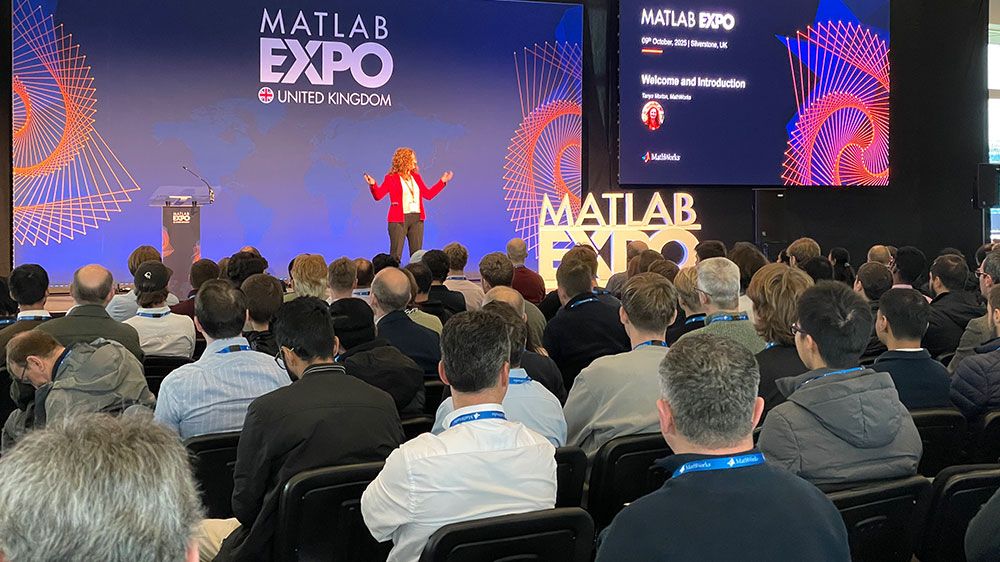
Welcome and Introduction
09:00–09:30
Tanya Morton
MathWorks Hall 3
|
Tanya Morton
MathWorks |
Hall 3 |
| 09:30 |
Keynote: The Agentic Engineer
09:30–10:00
Marcus Hatfield, Vice President of Corporate Development and Partner Programs
MathWorks Hall 3
|
Marcus Hatfield, Vice President of Corporate Development and Partner Programs
MathWorks |
Hall 3 |
| 10:00 |
Keynote: Enabling Safety Critical Systems at Scale: Architectures, Modelling, and Partnership Across BAE Systems
10:00–10:30
Jason Casey, Chief Engineer
BAE Systems Electronic Systems Jonathan Irving, Senior Engineering Delivery ManagerBAE Systems Submarines Andy Ward, Head of Functional SoftwareBAE Systems Air Hall 3
|
Jason Casey, Chief Engineer
BAE Systems Electronic Systems Jonathan Irving, Senior Engineering Delivery ManagerBAE Systems Submarines Andy Ward, Head of Functional SoftwareBAE Systems Air |
Hall 3 |
| 10:30 |
Break
|
||
| 11:15 |
Software and Simulation Factory
11:15–11:45
Oscar Klintenberg
Volvo Group Hall 1
|
Oscar Klintenberg
Volvo Group |
Hall 1 |
|
Building the Grid of the Future with HVDC Technology
11:15–11:45
Andrew Lancaster
GE Vernova Pablo BriffGE Vernova Hall 3
|
Andrew Lancaster
GE Vernova Pablo BriffGE Vernova |
Hall 3 | |
|
Master Class: Improving Software Quality: MATLAB Projects, Build Automation, and Collaboration
11:15–12:30
Matt Elliott
MathWorks Tom AndersonMathWorks IMC 1
|
Matt Elliott
MathWorks Tom AndersonMathWorks |
IMC 1 | |
| 11:45 |
Accelerate Product Development with Software and Hardware Model Pipelines
11:45–12:30
Fredrik Håbring
MathWorks Hall 1
|
Fredrik Håbring
MathWorks |
Hall 1 |
|
Agentic AI Workflows with MATLAB and Simulink
11:45–12:30
Paul Peeling
MathWorks Hall 3
|
Paul Peeling
MathWorks |
Hall 3 | |
| 12:30 |
Lunch and Networking
|
||
| 14:00 |
What’s New in MATLAB and Simulink
14:00–14:30
James Richmond
MathWorks Hannah PullenMathWorks Hall 3
|
James Richmond
MathWorks Hannah PullenMathWorks |
Hall 3 |
| 14:30 |
Panel Discussion: What Skills Matter for Engineers and Scientists and Where Does GenAI Add Real Value?
14:30–15:00
Moderator: Elre Oldewage
MathWorks Hall 3
|
Moderator: Elre Oldewage
MathWorks |
Hall 3 |
| 15:00 |
Break
|
||
| 15:30 |
MBSE in Practice: A Real-World Journey from System Modelling to Cyber Analysis
15:30–16:00
Charlie White
Vertical Aerospace Dominic HillVertical Aerospace Hall 3
|
Charlie White
Vertical Aerospace Dominic HillVertical Aerospace |
Hall 3 |
|
Transforming Vehicle Data into Engineering Decisions and Simulation with MATLAB
15:30–16:00
Swathi Imayakumar
Aston Martin Lagonda Hall 1
|
Swathi Imayakumar
Aston Martin Lagonda |
Hall 1 | |
|
Master Class: Effectively Verifying C and C++ Code with Polyspace Products
15:30–16:30
Benjamin Lewis
MathWorks Sonia BridgeMathWorks IMC 1
|
Benjamin Lewis
MathWorks Sonia BridgeMathWorks |
IMC 1 | |
| 16:00 |
Shift‑Left Safety and Cybersecurity Using a Unified Model-Based Workflow
16:00–16:45
Marco Bimbi
MathWorks Hall 3
|
Marco Bimbi
MathWorks |
Hall 3 |
|
Requirements-Driven Software Development in MATLAB
16:00–16:45
Dr. Laura Dempsey
MathWorks Hall 1
|
Dr. Laura Dempsey
MathWorks |
Hall 1 | |
| 16:45 |
End of Event
|
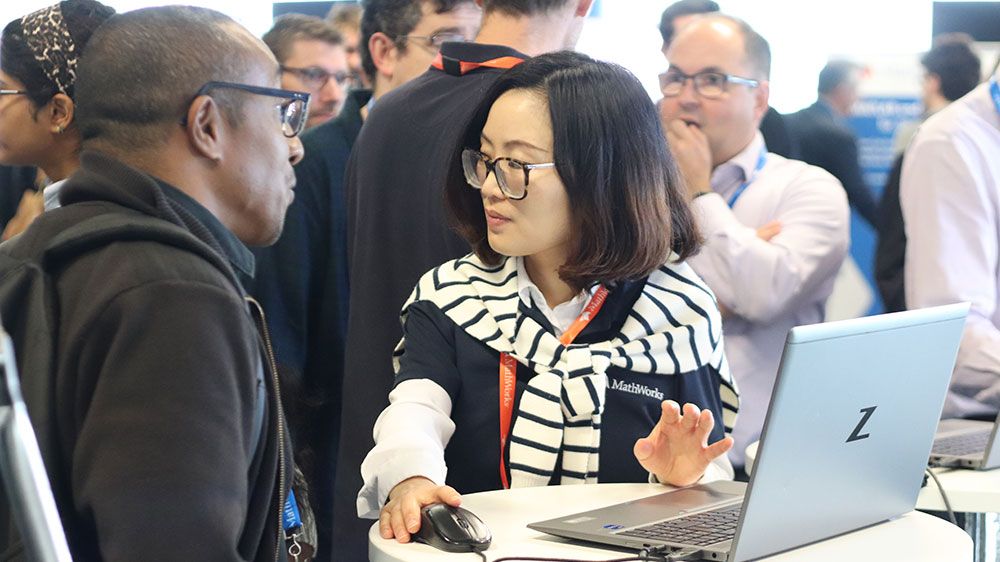
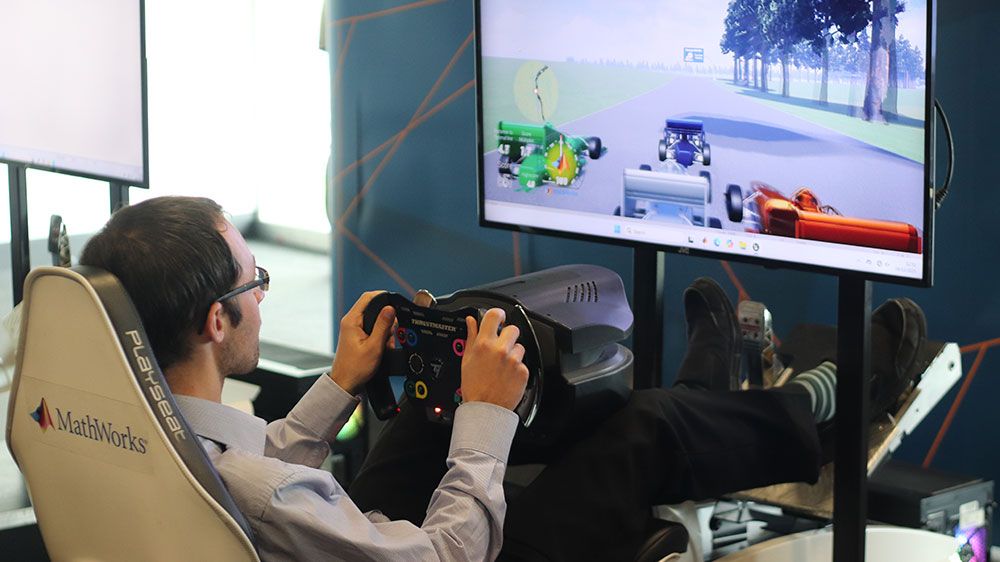
Visit the demo booths at MATLAB EXPO United Kingdom for interactive product demonstrations, speak with experts, and experience the latest features in MATLAB and Simulink.
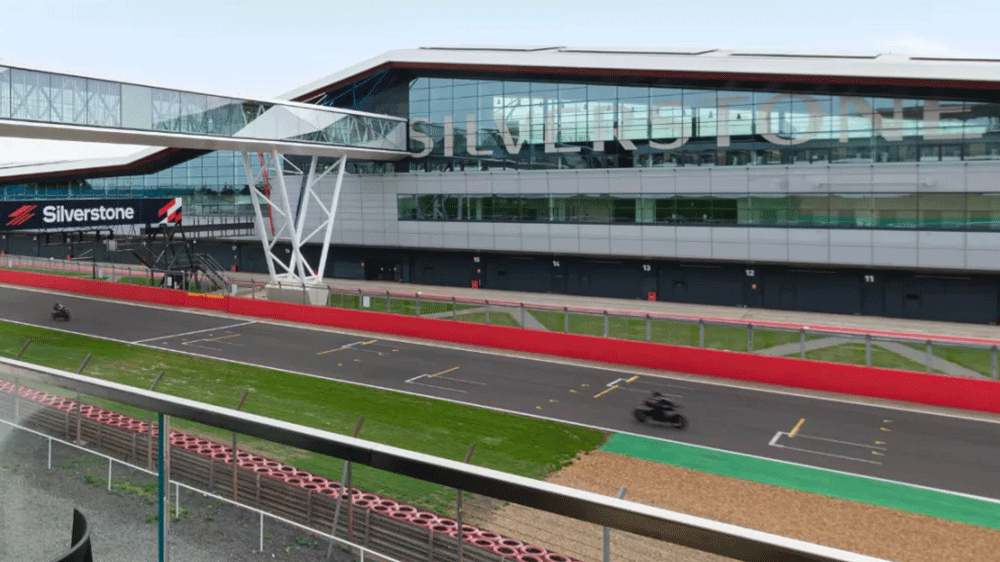
Silverstone Wing
Silverstone Circuit
Towcester
Northamptonshire
NN12 8TL
Follow the signs towards the International Conference and Exhibition Centre (Wing) at the south entrance.
View map
MATLAB EXPO United Kingdom is a technical conference for engineers, scientists, researchers, and educators to hear about industry trends, network, and learn about the latest features and capabilities in MATLAB and Simulink.
MATLAB EXPO United Kingdom will be held on 8 October 2026 at Silverstone.
MATLAB EXPO United Kingdom is free. Registration is required to attend.
MATLAB EXPO United Kingdom is an in-person event. Session recordings will be available following the event.
Yes, parking is available. Please visit the venue website for more information.
MathWorks is committed to providing an inclusive environment and quality experience for everyone. To ask questions about accessibility or request accommodations, please contact us.
Available session materials will be on the event page about a week after the event ends. Presentation slides and videos will be added periodically.

Secure your spot now to be part of MATLAB EXPO United Kingdom.