
November 4–5, 2026
The event is free, but registration is required.
The event is free, but registration is required.
Join MATLAB EXPO Online 2026 to connect with MathWorks and industry experts to learn about the latest trends and advancements in engineering and science. You will discover new features and capabilities for MATLAB and Simulink that you can immediately apply to your work.
MATLAB EXPO 2025 Highlights

Get inspired by new trends and customer success stories that are transforming industries.

Advance your skills during hands-on workshops designed to meet you where you are, whether you’re new to MATLAB and Simulink or looking to deepen your expertise.

Gain insights from trusted experts who are turning visionary ideas into real-world applications.

Connect with other engineers, scientists, educators, and researchers in the MATLAB and Simulink user community.

Keynote: The Agentic Engineer
Agentic AI is transforming how engineers work—from writing code and building models to capturing requirements and validating system behavior. As AI accelerates creation at every stage, the need to produce evidence that the systems work as intended increases in proportion.
In this keynote, follow the engineering journey from initial idea through prototyping, production readiness, and system validation—and see how MATLAB®, Simulink®, and agentic AI accelerate every stage. Whether you're prototyping a new concept, refactoring an existing model, generating requirements, or validating system-level behavior, discover how AI agents paired with MATLAB and Simulink can help you move faster with results you can verify. See demonstrations spanning app building, system modeling and simulation, test harness creation, and scenario generation.
Jason Ghidella is a senior principal technologist, product strategy at MathWorks, focused on digital engineering, Model-Based Design, software-defined systems, and emerging agentic AI workflows. His work centers on connecting engineering intent to implementation and verification by integrating requirements, models, software, tests, and verification results through Model-Based Design, continuous integration, automation, and software factory practices. More recently, he has been exploring how agentic AI can be integrated into development workflows while maintaining the traceability and engineering evidence needed to support engineering decisions. Drawing on more than two decades of experience across automotive, aerospace and defense, industrial automation, and machinery industries, Jason brings a practical perspective on how organizations adopt and scale modern engineering practices.

Keynote: From AI Assistants to Engineering Agents
Engineering organizations are moving quickly from generative AI assistants that suggest code to agentic AI systems that can plan and carry out multistep engineering tasks under human supervision. The productivity upside is real, but engineering is not general-purpose software development: Results must be grounded in physics, verifiable, and safe enough for deployment in products people depend on.
In this keynote presentation, CIMdata Principal Analyst Diego Tamburini examines what makes engineering AI different and why trust in these systems must be earned through workflows, evidence, and traceability rather than assumed in the agent itself. Drawing on CIMdata research into AI adoption across industrial organizations, Diego maps the transition from AI assistants to engineering agents, the governance and assurance questions that decide enterprise adoption, and the enduring reality that an engineer remains responsible for every result that ships, no matter how it was produced.
The keynote closes with CIMdata’s independent view: The next phase of engineering transformation will be driven not by AI alone, but by the convergence of AI, simulation, engineering knowledge, and digital engineering practices. Leave with a practical framework for evaluating agentic AI in your own workflows and for separating durable value from hype.
Diego Tamburini (he/him) is an executive consultant and AI practice director at CIMdata, a PLM research and consulting firm. He founded the firm’s AI in PLM practice and conceived and led CIMdata’s first global study of AI adoption across the product lifecycle. His focus is on helping industrial companies turn AI in PLM from hype into practical, measurable value. He previously led manufacturing and AI product strategy as a director at Microsoft, served as Autodesk’s senior design and manufacturing industry strategist, and worked as a lead PLM architect at Siemens Digital Industries Software, helping Boeing and Goodrich Aerostructures implement PLM solutions. He holds a Ph.D. and an M.S. in mechanical engineering from Georgia Tech and a B.S. in mechanical engineering.

Keynote: What's New in MATLAB and Simulink
Engineers and scientists are tasked with designing increasingly complex systems and adopting modern practices, all while shortening development cycles. At the same time, generative and agentic AI are transforming how engineering work is performed. New capabilities in MATLAB® and Simulink® enhance proven engineering workflows while adding capabilities for AI-assisted approaches.
See new capabilities that accelerate exploration and development; help engineers manage larger and more complex data and models; support verification and validation activities; simplify deployment of algorithms, models, and applications; and provide new capabilities for aerospace missions and vehicles, wireless communications, and RF engineering. Together, these advances enhance day-to-day productivity and provide a foundation for effective AI-enabled workflows, helping engineers manage complexity, validate AI-generated results, and deliver with confidence.
Whether you’re exploring the latest AI technologies or looking to improve your existing engineering workflows, you’ll discover new ways to work more effectively with MATLAB and Simulink.
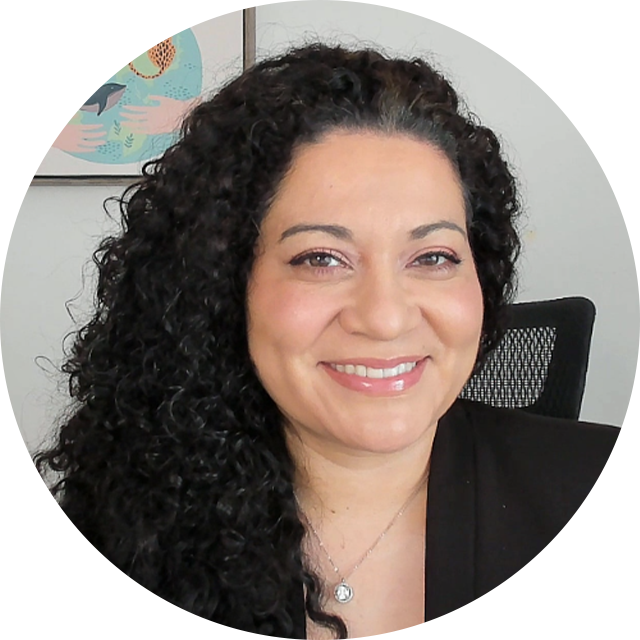
María Elena Gavilán Alfonso is a principal product marketing manager at MathWorks, where she works with engineering and technical leaders to advance the use of MATLAB in commercial and industrial applications. A customer-facing technical expert in simulation, AI, and numerical computing, she helps organizations connect MATLAB with modern engineering workflows, alongside other tools and ecosystems. María brings experience spanning computational fluid dynamics projects in the automotive and aerospace sectors, with research interests in autonomous systems, turbulence modeling, and climate technologies. Maria holds a B.Sc. in physics (National University of Colombia), an M.Sc. in aeronautics and astronautics (Purdue University), and an M.B.A. (UIUC).
Maggie Oltarzewski is a product marketing engineer with experience in systems engineering and robotics. She focuses on sharing the benefits of using Model-Based Design in Simulink. Maggie received her B.S in mechanical engineering from Rensselaer Polytechnic Institute and her M.S. in engineering management from Tufts University.


Secure your spot now to be part of MATLAB EXPO Online 2026.

We’ve got answers.